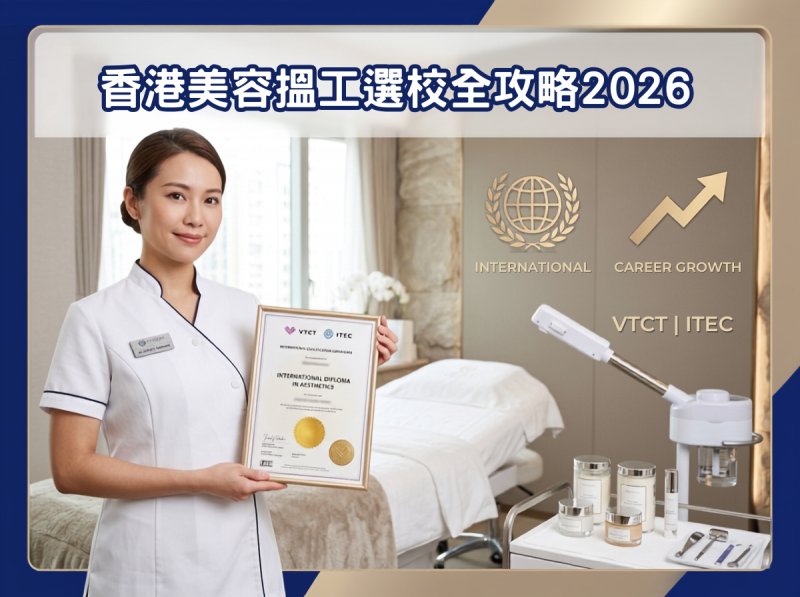
- In 2026, over 70% of full‑time/part‑time beauty job postings in Hong Kong explicitly require internationally recognised certificates during the CV screening stage. In‑house certificates have a pass rate of less than 20%.
- Beauty certificates fall into 3 tiers: In‑house < Local Institution < VTCT/ITEC/HKQF International Qualifications. The starting salary gap between tiers can reach 30%.
- Don't choose a school based solely on tuition fees. 4 career‑focused core indicators: certificate issuing body, proportion of hands‑on practical training, employment support resources, and whether the institution is government‑registered.
- This article compares 4 Hong Kong schools with high employer recognition: LBEDU Luster Beauty, Esther Academy, Frederique Academy, and FIA Academy, breaking down their respective employment advantages.
- LBEDU is a government‑registered institution (854) with a dedicated internal beauty job board, connecting graduates to over 100 beauty salons and medical aesthetic centres across Hong Kong.
- 1. According to LBEDU internal job board data from July 2026, 72% of beauty‑related job postings in Hong Kong stated "VTCT/ITEC/HKQF certification preferred."
- 2. Candidates with only an in‑house completion certificate had an initial CV screening pass rate of just 18%, with most only qualifying for low‑paid assistant positions.
- 3. Certification courses offered by government‑registered institutions not only have higher recognition, but some HKQF courses are also eligible for CEF (Continuing Education Fund) subsidies.
- 4. Beyond certificates, hands‑on practical experience and portfolio quality are key factors employers consider. Graduates from schools with small, paired‑practice classes (even numbers) are more competitive.
- 5. With the new Trade Descriptions Ordinance amendments coming into effect, regulatory compliance has become a core need for beauty salons. Practitioners with formal international certificates are increasingly preferred by employers.
2026 Hong Kong Beauty Job & School Selection Guide|70% of Jobs Require International Certificates
4 High‑Employability Beauty Schools Compared
1. The First Hurdle to Finding a Beauty Job: Why Certificates Matter More Than Experience
Many assume that in the beauty industry, skill is everything and certificates don't matter. However, in Hong Kong's job market, your certificate is the key that gets you an interview.
According to LBEDU's internal job board data from July 2026, among all open positions at over 100 partner beauty salons, medical aesthetic centres, and nail/micropigmentation studios across Hong Kong, over 70% of job postings explicitly listed "VTCT / ITEC / HKQF or equivalent international/official certification preferred" as a requirement. Some major chains and medical aesthetic groups have even made international certification a hard requirement – without it, you won't even get an interview.
There are three reasons behind this:
- Professional validation: Beauty services are invasive (laser, micropigmentation, microneedling, etc.). Employers need third‑party certification to validate a practitioner's technical skills and safety knowledge, reducing operational risks.
- Compliance requirements: With the Trade Descriptions Ordinance amendments taking effect, beauty salons are increasingly demanding staff with verified qualifications. Employees with legitimate certificates help salons stay compliant with regulations.
- CV screening efficiency: HR departments receive dozens of CVs daily. The fastest screening method is looking at the certificate's issuing body. In‑house certificates offer no differentiation, while international certificates immediately signal the candidate's training level.
Simply put: your skills can only be assessed during a trial session – but without the right certificate, you won't even get a chance to demonstrate them.
2. Comparing 3 Tiers of Beauty Certificate Recognition – Can an In‑House Certificate Really Get You a Job?
Beauty course certificates vary widely. By Hong Kong employer recognition standards, they fall into three distinct tiers:
| Certificate Tier | Common Types | Employer Recognition | Starting Salary Reference | Suitable For |
|---|---|---|---|---|
| Tier 1: International/Official Qualifications | VTCT, ITEC, HKQF, CIDESCO | Very high – recognised by 90%+ of chains and medical aesthetic centres | Full‑time start: $16,000 – $22,000 | Professional entry, full‑time job seeking, opening a studio, CEF applications |
| Tier 2: Local Industry Certificates | Local chamber of commerce, small assessment body certificates | Moderate – only some small salons recognise them | Full‑time start: $13,000 – $16,000 | Short‑term upskilling, supplementary skills |
| Tier 3: In‑house Completion Certificates | Certificates issued by the school/studio itself | Very low – most employers do not consider them as qualification proof | Only assistant roles, start: $11,000 – $13,000 | Interest‑based learning, personal use |
Important note: Many low‑cost courses advertise "certificate upon graduation," but they are often only in‑house completion certificates with almost no job‑search value. Before enrolling, always ask: Who issues the certificate? Is it a third‑party independent qualification like VTCT, ITEC, or HKQF?
3. Four Career‑Focused Criteria for Choosing a Beauty School
To ensure you can find a job after graduation, don't just look at advertising and tuition fees – focus on these four indicators:
Prioritise schools that offer VTCT, ITEC, HKQF, or other international/official certification courses. Your certificate is your core career capital – multiple in‑house certificates are meaningless. Ideally, choose a school covering multiple certification systems for more career options after graduation.
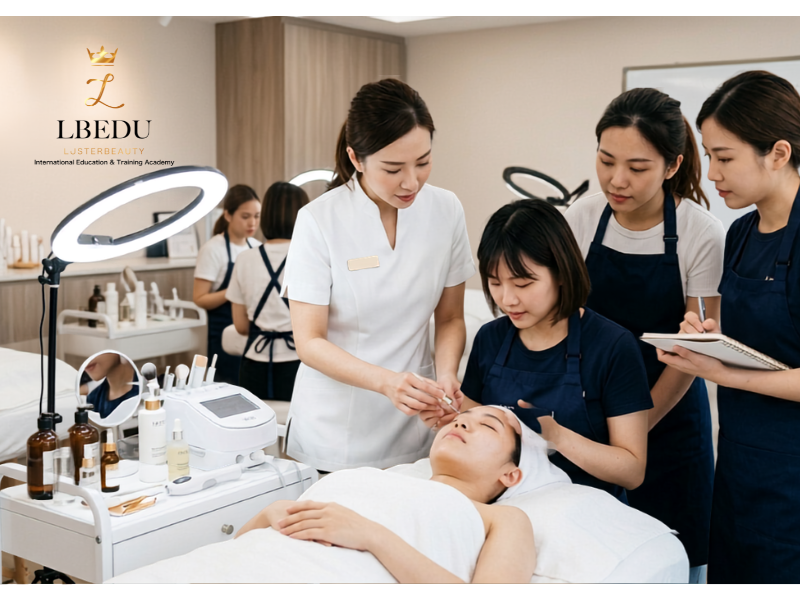
Beauty is a hands‑on trade – employers value practical ability above all. Be cautious of courses with less than 60% hands‑on practice. Also prioritise small classes (10 students or fewer) with even‑numbered pairing. In a paired‑practice model, each student receives 2‑3 times more instructor attention and practice opportunities compared to 20‑student classes – the difference in portfolio quality is very noticeable.
A good school won't cut you off after graduation. Check for: a dedicated internal job board (regularly updated with partner employer positions), one‑on‑one job search coaching (CV optimisation, interview skills), and priority referral opportunities at partner beauty salons and medical aesthetic centres. These resources can multiply your job‑search efficiency.
Prioritise government‑registered post‑secondary institutions – course quality, faculty, and teaching facilities are officially vetted, eliminating the risk of the school closing mid‑course. Additionally, HKQF courses may be eligible for CEF (Continuing Education Fund) subsidies, significantly reducing tuition costs.
4. Complete Comparison of 4 Highly Recognised Hong Kong Beauty Schools
Below is an objective comparison of 4 Hong Kong beauty institutions with high industry recognition and strong employment outcomes, covering certificates, class sizes, employment support, and other dimensions to help you choose based on your needs:
| Institution | Core Certification Systems | Typical Class Size | Employment Support | CEF Eligible | Ideal For |
|---|---|---|---|---|---|
| LBEDU Luster Beauty | VTCT + ITEC + HKQF + IQA Instructor | ≤10 even‑numbered paired classes | Dedicated internal job board + priority referrals to 100+ partner employers + CV & interview coaching | All HKQF courses eligible | Zero‑to‑hero career switchers, those seeking international certification, those who value employment resources, long‑term career planners |
| Esther Academy | CIDESCO, ITEC | 12‑20 students | No systematic job platform – only occasional referrals | Some courses eligible | Experienced practitioners upskilling, those who prefer the CIDESCO system |
| Frederique Academy | CIDESCO, ITEC | 15‑25 students | Only a small number of partner introductions | Limited subjects eligible | Those with higher budgets, who prefer a premium teaching environment |
| FIA Academy | Group‑specific internal certificates | 15‑30 students | Only internal group positions | Not applicable | Those certain they only want to work within that specific group, with no interest in other options |
Source: 2026 public information from each institution's official website, LBEDU employment team market research.
5. Zero‑to‑Hero Beauty Career Switcher – 3‑Step Job Search Strategy
If your goal is to get into the industry quickly, prioritise high‑demand, fast‑entry fields:
- Aiming for beauty chain salons: prioritise VTCT Level 2/3 Beauty Therapy, Nail Technology
- Targeting high‑income freelance work: prioritise SMP Scalp Micropigmentation, Semi‑Permanent Makeup, Laser Aesthetics
- Long‑term goal as an instructor: start with operational courses, then progress to IQA International Instructor Certification
Employers always ask to see your portfolio during interviews. Organise your in‑class paired practice cases and after‑class work into clear before‑and‑after comparisons. If possible, participate in community volunteer teaching (e.g., YWCA 50+ Beautiful Life Programme) to accumulate real client case studies – this will give you a significant edge over peers.
- Prioritise your school's internal job board – positions come from partner employers with much higher hiring rates than public listings.
- Join industry groups and beauty practitioner communities – many small studio positions are not publicly advertised.
- Build a personal portfolio account on social media – many employers actively reach out to skilled practitioners they discover online.
6. Frequently Asked Questions
Conclusion
For long‑term career development in Hong Kong's beauty industry, an internationally recognised certificate is the single best investment you can make. It determines not only whether you get an interview and your starting salary, but also your future promotion, entrepreneurial, and instructor‑track opportunities.
Rather than spending a few thousand dollars on an in‑house certificate course only to face repeated rejections, it's wiser to invest from the start in an international certification course at a government‑registered institution. Build a solid foundation, make full use of your school's employment resources, and your entry into the industry will be far smoother.
If you'd like to learn more about LBEDU's VTCT/HKQF courses, employment statistics, class schedules, campus visits, or syllabus details, feel free to WhatsApp our education consultants for a one‑on‑one career pathway consultation.
Further Reading
1. 2026 Hong Kong Beauty School Ranking Comparison|5 Academies' Strengths, Fees, Certifications & Job Support
2. VTCT Level 4 Laser Beauty Course Complete Guide|Fees, Exam Content, Graduate Income + CEF Application
3. 2026 Men's Beauty Entrepreneurship Guide|SMP Scalp Micropigmentation + Men's Wild Brows – Market Demand & Income Analysis
4. How to Become a Beauty Instructor? IQA International Instructor Qualification Guide|YWCA Community Teaching Internship Dual Certification
Comments (0)
No comments yet
Leave a Comment