
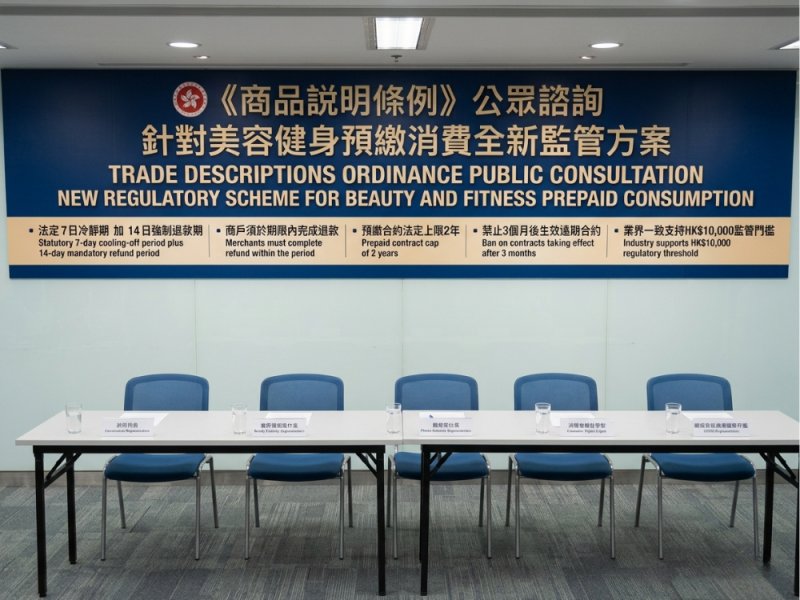
- ‧ Two-month public consultation covers cooling-off period, refund mechanism, contract cap and远期 contract ban
- ‧ Legislative Council review next week with full Consumer Council support aligning with longstanding advocacy
- ‧ IQA industry meeting overwhelmingly backs HK$15,000 as the regulatory threshold
- ‧ Industry proposes refund calculation formula, 5% admin fee and tailored rules for nail and lash sectors
- ‧ Vice President Wong advocates industry standards before legislation, promoting voluntary charters and professional accreditation
- ‧ New rules will drive polarisation with professionalisation becoming the key to survival
- ‧ LBEDU to attend Legislative Council meeting in mid-July presenting frontline industry views
Hong Kong government launches public consultation on beauty and fitness prepaid consumption, with Legislative Council review next week. Industry unanimously supports HK$15,000 regulatory threshold following IQA seminar, while proposing refund calculation formulas and SME compliance support. LBEDU will attend the Legislative Council meeting to represent frontline practitioners.
2026 Hong Kong Beauty Prepaid Regulation Guide | Cooling-Off Period Legislation & Industry Consensus
Five Core Regulatory Proposals
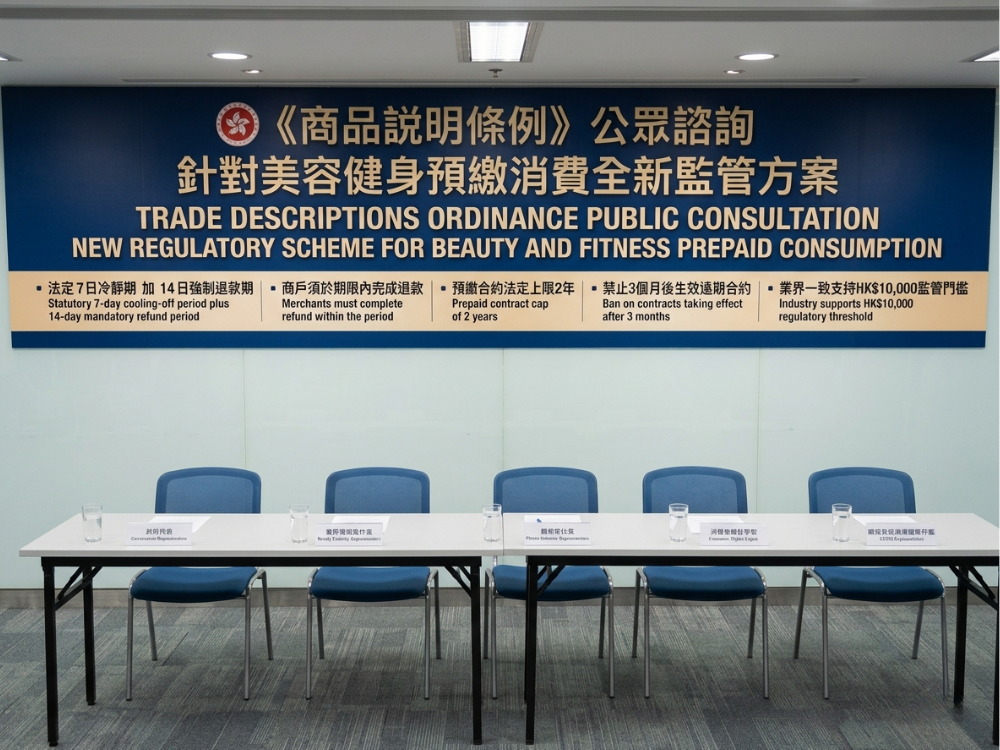
This regulatory reform targets the beauty and fitness industries, which have long been plagued by high volumes of prepaid consumption complaints. Five enhanced regulatory measures have been introduced to close longstanding market loopholes:
| Regulatory Focus | Specific Provisions |
|---|---|
| 7-Day Cooling-Off Period + 14-Day Mandatory Refund | Consumers have a 7-day unconditional cancellation period after signing; merchants must complete refunds within 14 days. Services already used may be deducted at the standard market rate. |
| Three-Tier Regulatory Thresholds (Under Consultation) | Option 1: HK$3,000 or above (covers 80% of complaints) / Option 2: HK$8,000 or above (covers 70% of complaints) / Option 3: HK$15,000 or above (covers 60% of complaints) |
| 2-Year Cap on Prepaid Contracts | Excessively long binding contracts are prohibited. All prepaid service contracts are capped at a maximum validity of 2 years. |
| Prohibition on Forward Contracts Effective After 3 Months | Merchants are prohibited from signing prepaid contracts that only take effect 3 months after signing, closing the long-cycle prepayment loophole at its source. |
| Enhanced Enforcement Powers Under Serious Crime Legislation | "Improper acceptance of prepayments" is included under the Organised and Serious Crimes Ordinance, empowering Customs to freeze assets of non-compliant merchants. |
Legislative Council & Consumer Council Latest Positions
Legislative Council: The Economic Development Affairs Committee will convene a special meeting next Tuesday to review the amendment. DAB legislator Chow Ho-tin has publicly supported the new regulations, stating that the two-month consultation period is sufficient to balance stakeholder interests and address the misconduct of a small number of "bad actors" in the industry.
Consumer Council: Fully endorses the new regulatory framework, stating that measures such as the 7-day cooling-off period and mandatory refunds align perfectly with its long-standing advocacy, helping reduce consumer disputes and lowering the barriers to rights protection.
IQA Industry Seminar | Final Industry Consensus
The IQA (International Qualifications Assessment Alliance) convened beauty industry directors, experienced principals, and training sector representatives for an online meeting. Our President Ms. C.Y. Wong, Vice President Mr. Lawrance Wong, and Director Ms. S.Y. Tse participated throughout the session.
Five threshold options were presented, and after multiple rounds of data analysis and debate, representatives overwhelmingly supported HK$15,000 as the optimal regulatory threshold.
- Precise risk differentiation: Amounts below this level typically involve single treatments or light packages, which are routine consumer spending; amounts above this level involve long-term specialist treatments and annual equipment packages, representing the high-risk zone.
- Protects small and medium-sized local businesses: Avoids burdening daily operations with cumbersome compliance processes that would come with a lower threshold.
- Balances consumer rights and industry sustainability: Covers the vast majority of high-risk contracts without creating regulatory gaps.
- Aligns with market consumption patterns: Matches consumer budgets and mainstream beauty salon package pricing, making it the most acceptable balance point for consumers, SMEs, and chain operators alike.
Industry Representative Historical Views
Vice President Lawrance Wong's Core Positions from Previous Cooling-Off Period Consultation Meetings
As early as the first public consultation on statutory cooling-off periods for beauty services in 2019, and the October 2024 government seminar on prepaid consumption regulation, Vice President Wong attended as an industry representative on multiple occasions, consistently advocating for preserving a healthy operational environment for the industry:
- Questioning blanket mandatory legislation: Not all consumer disputes should be addressed through rigid statutory regulation. The industry would simply adapt its practices to circumvent provisions, failing to address root causes.
- Advocating voluntary industry charters: Drawing on soft regulatory mechanisms like the "Good Employer Charter," advocating for industry self-regulation through voluntary commitments, reputation-based certification, and market-driven accountability, rather than one-size-fits-all legal mandates.
- Early implementation timing was premature: During the 2019 and 2024 periods, the market lacked standardised dispute data, standardised refund calculation methods, and clear regulatory rules. Rushed legislation would have led to implementation confusion.
- Standards before regulation: Prioritise standardising refund rules, service grading, and prepayment caps through industry consensus, accumulate sufficient data and implementation experience, then progressively refine regulations to ensure they reflect frontline operational realities.
Industry Training Team's Frontline Predictions on Cooling-Off Period Provisions
Our training team, drawing on years of industry experience, predicts that once the new regulations take effect, the cooling-off period and refund provisions will become more detailed and standardised. As public awareness grows, consumers will increasingly expect practitioners to clearly explain contract terms. This means frontline service standards will be comprehensively upgraded—"clearly explaining regulatory terms, standardising contract communication processes, and professionally addressing consumer rights queries"—will become essential capabilities, driving the entire industry towards greater professionalism and transparency.
Compilation of Multi-Sector Industry Opinions
Refund Calculation Formula Recommendation:
Refund Amount = Contract Total - Market Value of Services Already Used - Cost of Gift Items Already Opened - Cost of Complimentary Treatments Already Used - 5% Administrative Processing Fee
The proposed 5% administrative fee is not a penalty, but rather to cover actual merchant operating costs such as credit card transaction fees, client data system registration, and contract archiving, while also discouraging frivolous cancellation behaviour.
Five Core Requests:
- Relax regulatory requirements for small-value prepayments in light beauty services (nails, lashes), supporting the HK$10,000 threshold option
- Establish special deduction rules for customised, irreversible services—if a client cancels after receiving the full service, the full standard rate should be charged
- Support the 5% administrative fee mechanism to ease the operational burden on small outlets
- Support contract duration limits and forward contract bans to promote orderly development of the light beauty market
- Call for dedicated compliance guides and free standardised contract templates for small outlets
Nine In-Depth Discussion Topics (Full Industry Opinion Record)
- Regulatory threshold: Unanimously confirmed HK$15,000 as the optimal option, recommending the government include it as a core consultation reference.
- 7-day cooling-off period implementation details: Cooling-off period counts from the contract signing date; 14-day refund period calculated in working days; services already used deducted at the standard per-unit rate, not at promotional package rates; electronic payment processing fees borne by merchants, not passed to consumers.
- 2-year contract cap supporting measures: Renewals treated as new contracts with a fresh cooling-off period; recommended adding anti-fragmentation clauses—multiple prepaid contracts with the same customer within 30 days should be aggregated.
- Closing the "shop renaming" loophole: Regulatory scope should be determined by the nature of services provided, not by shop name—whether a business calls itself a health centre, wellness studio, skin clinic, or body contouring studio, it should be covered under the same regulations.
- SME compliance support: Industry recommends government provide free standardised contract templates, compliance guides, and free training to help small studios and independent practitioners who cannot afford legal costs.
- Anti-harassment sales regulation: Clear prohibition on "limited-time offers," "buy now or prices go up," and other coercive, misleading sales tactics to reduce consumer disputes at the source.
- Consumer protection during business closure or transfer: Exploring solutions including prepayment escrow, industry compensation funds, and mandatory contract succession upon transfer.
- Differentiated regulation for accredited institutions: Recommending a "positive incentive mechanism"—institutions holding IQA, ITEC, VTCT international certifications and participating in accredited beauty salon systems should receive compliance flexibility benefits.
- Long-term industry professionalisation upgrade: As regulatory oversight tightens, the industry must transition from "relying on prepayment sales to survive" to "retaining clients through professional skills and reputation." The industry recommends expanding CEF coverage for professional beauty courses, encouraging practitioners to obtain official and international qualifications.
Five-Year Complaint Data | The Real Market Problems Behind the Reform
According to Consumer Council official statistics from 2021-2025:
Approx. 1,800 average annual prepayment-related complaints in beauty services
Approx. 1,200 average annual prepayment-related complaints in fitness services
Over HK$100 million annual disputed amount across both industries
Primary dispute scenarios: sudden business closures/ownership transfers, high-pressure sales tactics inducing prepayments, hidden contract terms, refund denials, and excessively long contract lock-ins.
Before the New Law Takes Effect | Three Practical Self-Protection Tips for Consumers
- Choose internationally certified practitioners: ITEC, VTCT, IQA and other international certifications are core indicators of professionalism and trustworthiness. Trained practitioners will proactively disclose device information, service contraindications, and post-treatment risks, significantly reducing service disputes.
- Choose IQA World or Foammall QS-certified beauty salons: Third-party audited salons maintain rigorous standards in practitioner qualifications, equipment authenticity, medical-grade disinfection, contract transparency, and complaint handling mechanisms. Certification records are publicly verifiable and traceable even if a business changes its name.
- Four golden rules for signing contracts: Refuse on-the-spot limited-time pressure sales, do not sign forward contracts effective after 3 months, avoid large one-time prepayments (recommend short-term packages within 6 months), and keep complete records of contracts, receipts, and communications.
Future Industry Watershed | Professionalisation Determines Survival
- Grey-market operators: Those relying on high-pressure sales, frequent name changes, and employing unqualified practitioners → will be gradually phased out through accumulating complaints and enforcement actions.
- Professional operators: Those holding international certifications, maintaining transparent contracts, and building their businesses on skills and reputation → will become the industry mainstream.
The future core competitiveness of the beauty industry will shift from sales techniques to professional qualifications, technical expertise, and compliant operations.
LBEDU Official Position & Industry Engagement
- Offers only HKQF, ITEC, VTCT, and IQA official/internationally accredited courses, ensuring the value of student qualifications
- Actively promotes IQA and Foammall professional beauty salon certification systems, establishing positive industry standards
- Participates fully in industry policy discussions, genuinely representing frontline SME and practitioner voices
Important Announcement: President Ms. C.Y. Wong, Vice President Mr. Lawrance Wong, and Director Ms. S.Y. Tse will attend a Legislative Council member Jeffrey Siu's industry-focused meeting in mid-July 2026, where they will present industry recommendations directly to legislators and government departments on cooling-off period details, threshold settings, loophole closures, SME protections, and practitioner service standard training.
Frequently Asked Questions (FAQ)
Sources
Commerce and Economic Development Bureau - Trade Descriptions Ordinance Prepaid Consumption Public Consultation Document (2026)
Consumer Council Official Response Statement and 2021-2025 Complaint Data Report
IQA International Qualifications Assessment Alliance 2026 Mid-Year Industry Seminar Meeting Records
Legislative Council Economic Development Affairs Committee Meeting Agenda Documents
2019 Beauty Cooling-Off Period First Round Public Consultation Meeting Records
October 2024 Prepaid Consumption Regulation Industry Seminar Records
Yaffa Soft Glow Studio and Ruby's Nail and Eye Care (RNEC) Frontline Operational Feedback
Comments (0)
No comments yet
Leave a Comment